The Shrine of the Avatar
The Shrine at the End of the Road
Earl Starcher built a piece of India in Columbus, New Mexico. A train that came through half a century earlier may be the key to what happens next.
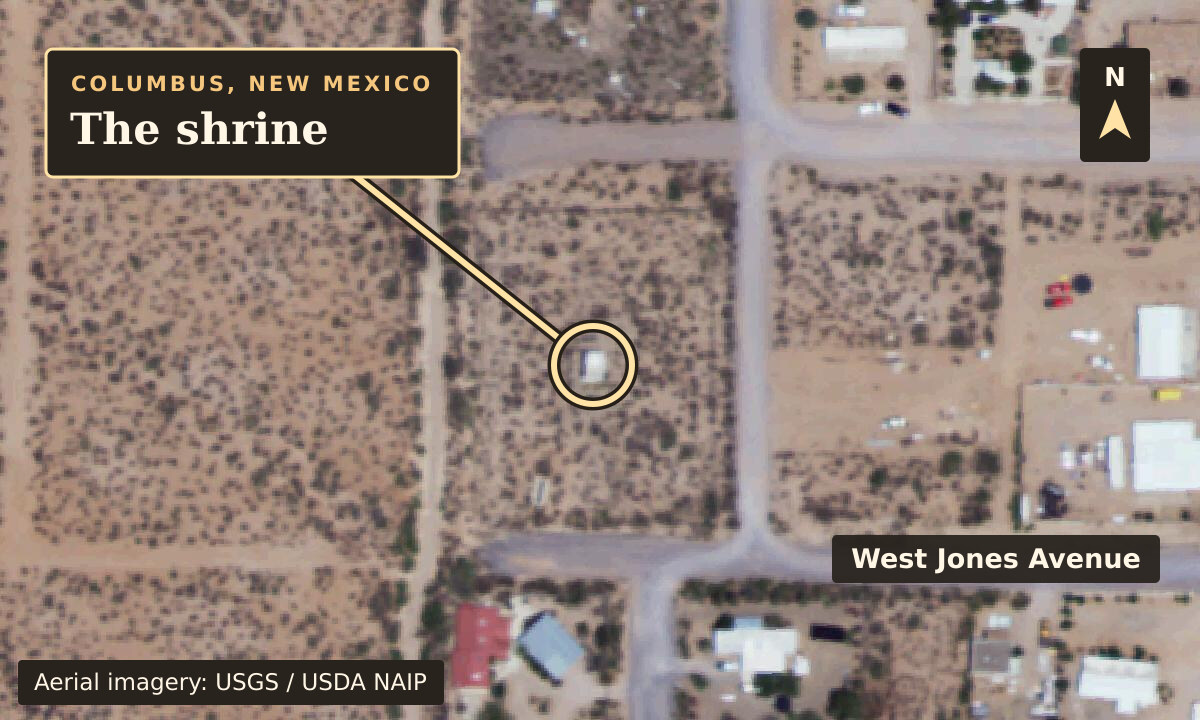 Click for Google Maps (opens in a new tab)
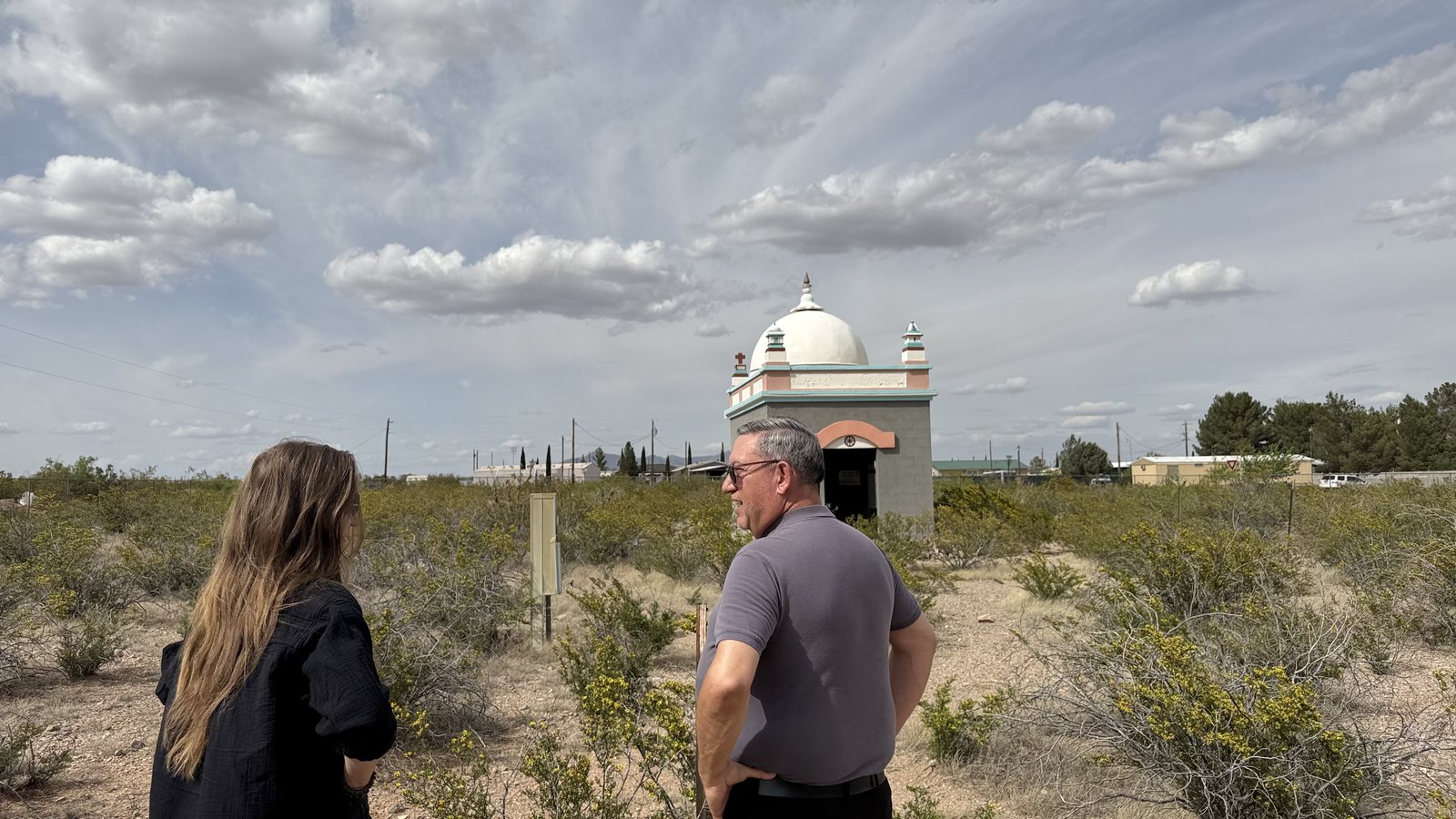
Take Jones Street west until it runs into Adams. Out in the scrub stands a little domed building that looks like it took a wrong turn somewhere between India and the Mexican border.
That’s Earl Starcher’s shrine. If you want to know why he built it, start there. If you want to know what makes it a Columbus mystery, go back to the old railroad depot.
Earl came with an Airstream
Around 1980, a former Miami air traffic controller rolled into Columbus with a truck and an Airstream. Earl was looking for a place that felt like Meherabad, the part of India where his spiritual teacher, Meher Baba, is buried. Something about the dry air and the light here felt right to him. So he stayed.
He got hold of exact measurements and close-up photographs of Baba’s tomb-shrine, brought back from India by Anne Conlon. By the late 1980s, cinder blocks were going up in the Columbus dirt. Earl put up plaques in English and Spanish. He pictured a library where people could learn about Baba and a shrine for those who might never make it to India.
He called it the Perfect Man Shrine. He died in 1994 before he could finish it. Ken and Sheila Emery looked after it in the years that followed, and a restoration team is working to reopen it.
Here’s the part Earl had no idea about when he picked Columbus. The man he was building it for had almost certainly been through town first.
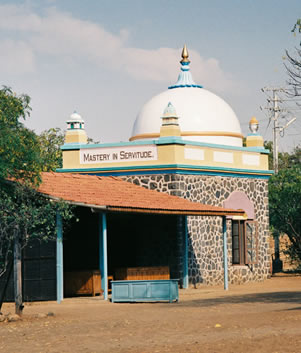
Two shrines, side by side
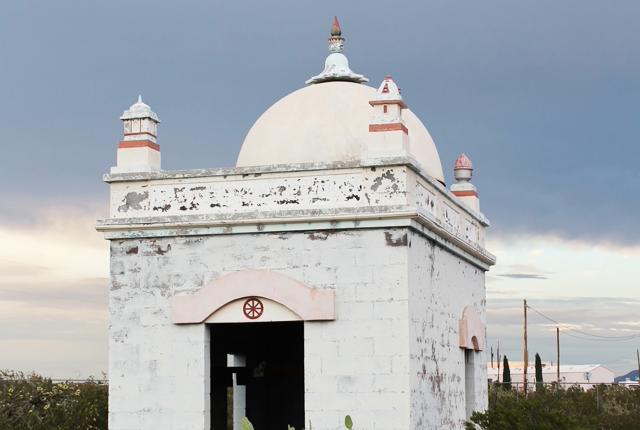
Look above both entrances for the same motto, “Mastery in Servitude.” The Columbus replica follows the shape of the dome and the small pinnacles around it.

The Columbus shrine through the years

The Saturday train
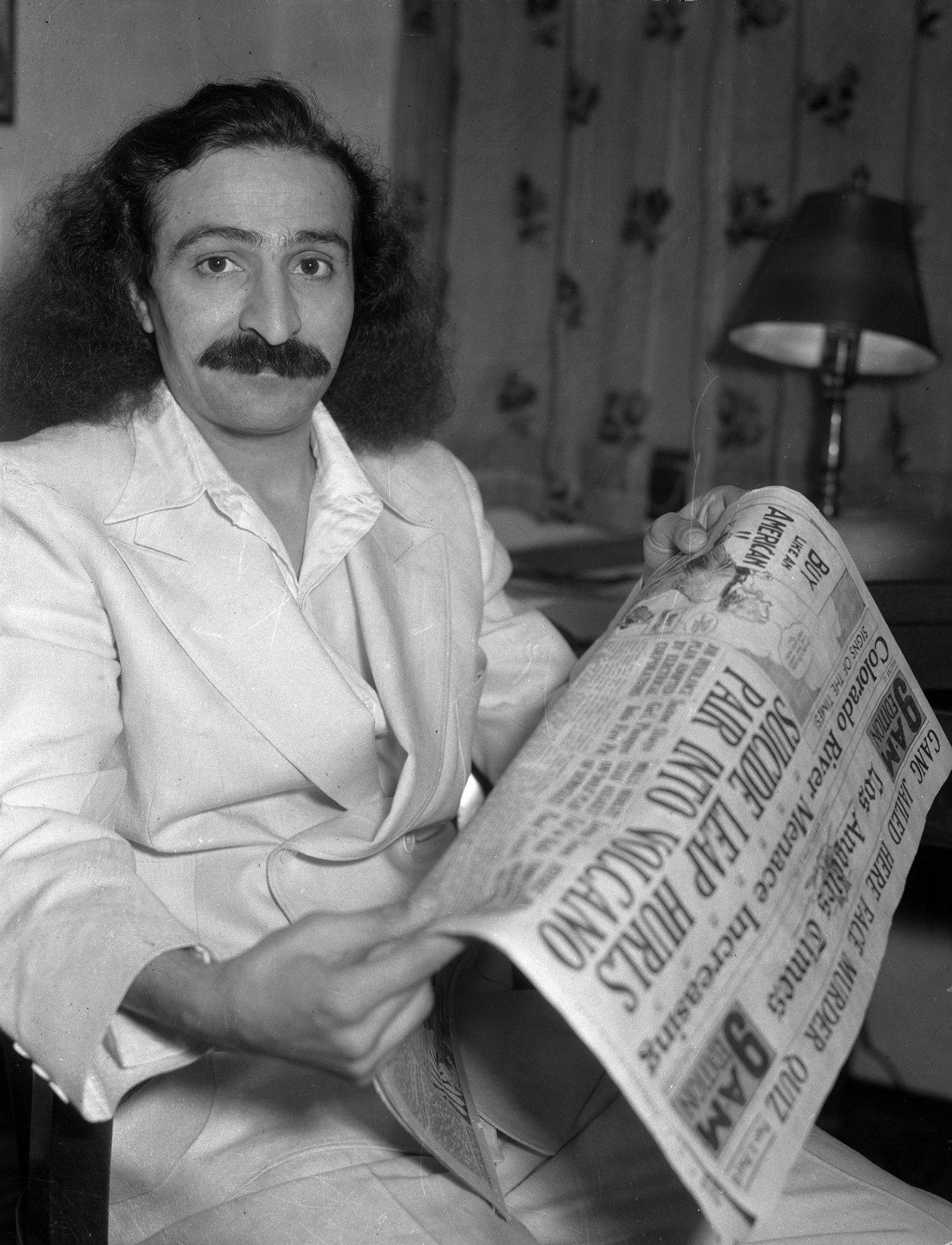
Meher Baba was on his way to Southern California on May 28, 1932. His biography records that he got off the train in El Paso and went for a short walk. By late afternoon, he was in Tucson. Between those two entries lies a stretch of railroad that ran right through Columbus.
There’s even a twist in the calendar. May 28, 1932, was Earl’s second birthday. His birthplace? Columbus, Ohio. The other Columbus would have to wait nearly fifty years for him to show up.
The January 1932 Rock Island timetable sends the westbound Golden State Limited through Douglas, Arizona. The old line from El Paso to Douglas ran through our village. That gives us good reason to believe Baba passed the Columbus depot. The same timetable gives no scheduled stop here for that train.
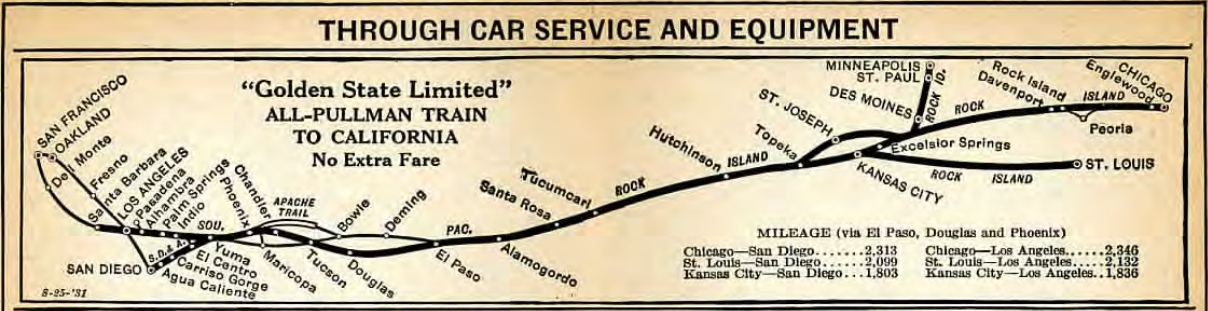
Then there’s the April timetable, closer to the day Baba traveled. Two archives list it in their collections. We know it survives. We still need to see what it says. A station register or a railroad crew’s record dated May 28 could tell us whether the train actually stopped. And if it did, a companion’s diary or a photograph could tell us something a timetable never will.
Two places to see in Columbus
Start at the old depot, which now houses the Columbus Historical Society Museum. Stand where the railroad came through and look down the line it once took. Then head west on Jones to Adams and look for Earl’s dome from the road. Check the restoration project for current access before planning to go onto the grounds.
The dome is there because one man wanted to give Baba’s followers a place to come. Proof that Baba himself was here could give the shrine’s supporters a case for formal recognition as a pilgrimage site. Who makes that call and what evidence they’d accept are questions we still have to settle.
If your family has railroad papers, a station log, or photos from spring 1932, I’d like to hear from you. In El Paso, we know Baba got off and took a walk. Then the story goes quiet. If his train stopped at our depot that Saturday, did Baba step down?
Sources and links
The Shrine of the Avatar — Shrine Story — Earl Starcher, the construction of the shrine, and the restoration team’s account of the railroad connection.
The Shrine of the Avatar — Restoration Progress — restoration milestones and project updates.
Avatar Meher Baba Trust — Tomb-Shrine — the original tomb-shrine in Meherabad, India.
Lord Meher, p. 1425 and Meher Baba chronology hosted by the Avatar Meher Baba Trust — the May 28 train journey and the El Paso and Tucson accounts.
Anthony Zois — 1932 train trip from El Paso to Los Angeles — reconstruction of the train route through Douglas.
Rock Island passenger timetable, January 28, 1932, printed pp. 7–8 and U.S. Department of Energy — historic railroad route — period train routing and the route through Columbus.
Indiana Historical Society — timetable collection, CRIP Box 1 and San Diego Model Railroad Museum — timetable finding list, P Box 7 — catalog entries for the April 24, 1932, timetable. The timetable itself is still to be examined.
Eye On Columbus — contact — send railroad records, dated photographs, or accounts tied to the May 1932 trip.
Columbus Historical Society Depot Museum — museum information before visiting the old depot.
New Mexico Magazine — In Ruins — roadside approach and Emily Dossett’s photograph of the shrine.
Los Angeles Times Photographic Collection, UCLA Library — Meher Baba reading the Los Angeles Times, 1932 — photo by the Los Angeles Times, via Wikimedia Commons. Licensed CC BY 4.0. Resized for web.
The Shrine of the Avatar — official restoration project site and visitor updates.
So Far From Heaven — Columbus shrine photo published in 2012
Meher Baba Travels — Columbus shrine gallery, including the 2016 photos
The Shrine of the Avatar — homepage and current Columbus shrine photos
Win Coates — Meher Baba’s tomb-shrine in Meherabad via Wikimedia Commons. CC BY-SA 3.0. Original file.
USGS National Map, USDA NAIP aerial imagery — annotated to show the shrine off West Jones Avenue.

